
How Does Flexographic Printing Work?
Flexographic printing, commonly known as flexo, uses flexible printing plates to transfer ink onto a substrate. Each colour generally requires a dedicated plate and printing unit, with ink transferred through an anilox roller.
The technology is widely used for flexible packaging, labels and films, but can also be applied to certain rigid containers. One of its main strengths is its ability to achieve high production speeds and consistent results, particularly for large volumes of standardized designs.
However, preparing printing plates, adjusting colour registration and changing designs require additional time and resources.
How Does Digital Printing Work?
Digital inkjet printing reproduces designs directly from digital files, using printheads to deposit ink droplets onto the packaging surface without physical printing plates. This enables manufacturers to reproduce complex graphics, photographic images and detailed designs while significantly simplifying changeovers.
Digital printing also supports variable data printing, allowing different graphics, text or identification elements to be printed on individual containers within the same production run. These capabilities make it particularly attractive for manufacturers managing multiple SKUs, limited editions and personalized packaging.
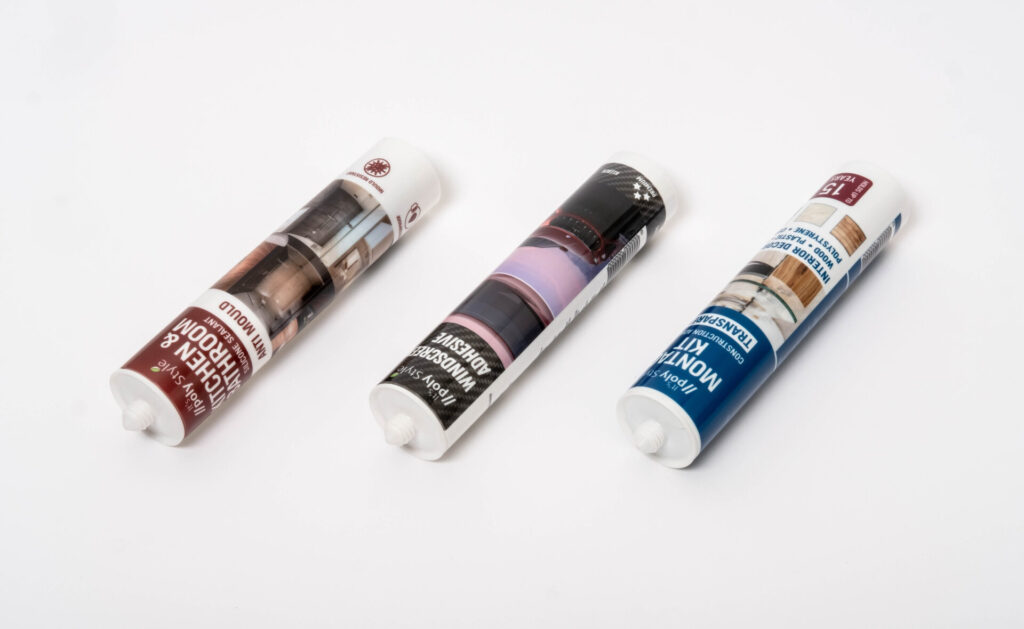
Comparing the Two Technologies
Print Quality and Colour Reproduction
Flexographic printing can achieve excellent colour consistency and reproduce fine details, gradients and images. However, print quality depends on factors such as plate resolution, anilox selection and registration accuracy.
Digital inkjet printing precisely controls ink deposition, enabling high-quality reproduction of complex designs, fine details and photorealistic images. While flexographic printing can use dedicated spot colours to match specific brand colours, digital printing reproduces a wider colour range thanks to its CMYK ink configuration.
Productivity Beyond Printing Speed
Flexographic printing generally offers higher production speeds, making it particularly effective for continuous, standardized production.
However, industrial single-pass digital printing can also achieve high output rates, making it suitable for mass production rather than just short runs. And unlike flexo, it can print different designs at full production speed, without requiring separate printing plates or mechanical changeovers.
The Cost of Printing Multiple Designs
Consider a manufacturer producing one million containers with a single design, compared to another producing the same quantity across 20 different designs.
With flexographic printing, each design requires its own set of printing plates, along with the associated preparation and changeover operations. In the second scenario, these additional costs can become significant, even though the total production volume remains identical.
Digital printing eliminates these plate-related expenses. The cost of printing different designs is therefore less dependent on the number of artwork variations, making it particularly attractive for manufacturers managing diversified product portfolios. This illustrates why digital printing can remain economically competitive even at high production volumes.
Which Technology Should Manufacturers Choose?
Production volume alone is no longer enough to determine the most suitable printing technology. Flexographic printing remains highly competitive for continuous production of standardized designs, where high output and established processes help optimize costs.
However, modern industrial digital printing systems are increasingly capable of handling high production volumes as well. Their advantage extends beyond short runs and personalization: eliminating printing plates, simplifying changeovers and reducing setup waste can also make digital printing economically attractive for large-scale manufacturing.
The key consideration is therefore not simply how many containers need to be printed, but how production is organized. Design complexity, the number of references, changeover frequency and total operating costs can have just as much impact on profitability as printing speed itself.