
Different Approaches, Different Philosophies
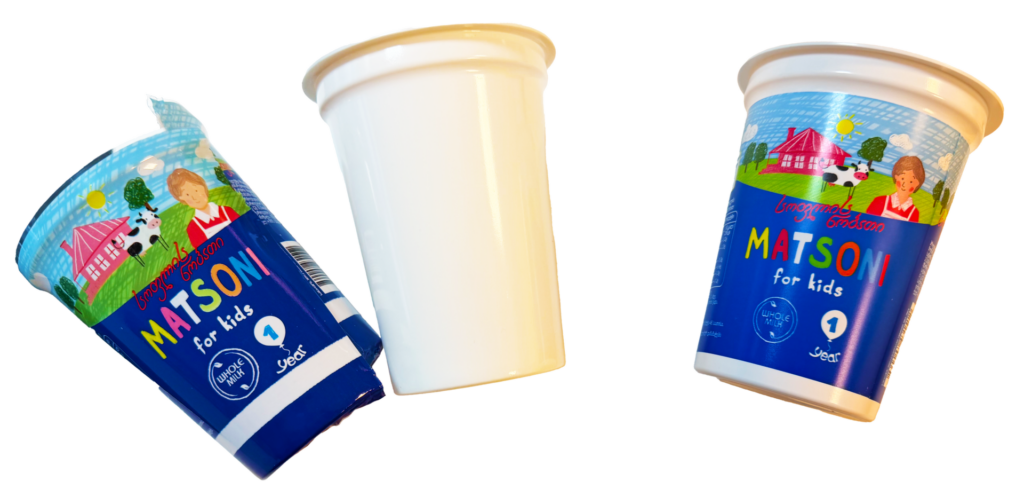
In-Mold Labeling (IML) integrates decoration directly into the container manufacturing process. A preprinted label is placed inside a mold and becomes part of the packaging during molding.
This technology is widely used for rigid plastic containers, particularly in food packaging. It offers excellent print quality, durable decoration and efficient production for large quantities of identical designs.
Direct-to-Shape printing applies graphics directly onto an already manufactured container, without requiring a separate label.
Different printing technologies can be used, including dry offset, Prime Offset and digital inkjet printing. Depending on the process, direct-to-shape can reproduce anything from simple spot-colour designs to complex photorealistic graphics.
How Do the Two Technologies Compare?
Print Quality and Design Possibilities
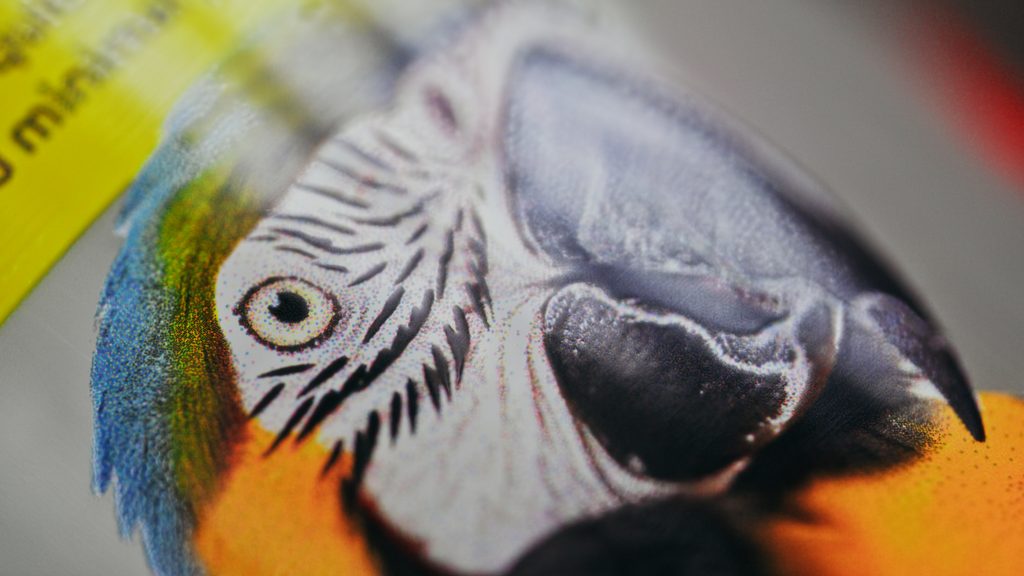
IML uses a preprinted film, allowing complex graphics to be reproduced on a flat substrate before being integrated into the container. This provides excellent control over print quality, even for detailed photographic designs.
Direct-to-shape prints directly onto a three-dimensional surface, making container geometry, surface treatment and ink adhesion important factors in the final result. Modern digital direct-to-shape systems can achieve a label-like appearance, while offering the additional possibility of changing designs without producing new labels.
The distinction is therefore less about achievable image quality and more about how the design is applied and how easily it can be changed during production.
Production Efficiency and Flexibility
One of the main differences lies in when decoration takes place.
With IML, the label is integrated during container manufacturing. This eliminates a separate downstream decoration operation and can be particularly efficient for large production runs with stable designs.
With direct-to-shape, container manufacturing and decoration are separate operations. This provides greater flexibility in production planning, as undecorated containers can be manufactured independently of their final design.
Digital direct-to-shape extends this flexibility by enabling near-zero changeovers between designs, making it easier to manage multiple SKUs, limited editions and smaller production batches.
Material Consumption and Recyclability
By eliminating the separate label substrate, DTS can reduce the amount of material required for decoration and avoid the associated label production and handling processes.
However, material reduction does not automatically translate into better recyclability. IML can be compatible with established recycling streams, particularly when the label and container use compatible materials. Similarly, direct-to-shape inks and coatings must be evaluated for compatibility with the intended recycling process.
The overall environmental performance therefore depends on the complete packaging structure and production conditions.
Inventory Management and Time-to-Market
IML requires coordination between label production and container manufacturing. Each design needs the appropriate labels to be available when containers are molded.
DTS allows manufacturers to separate these activities, potentially maintaining inventories of undecorated containers that can be printed according to demand. This can be particularly useful when managing multiple product references or frequently changing designs.
The Growing Role of Digital Direct-to-Shape Printing
While conventional direct-to-shape technologies have been used for decades, digital inkjet printing is expanding their applications. Modern industrial systems combine high-resolution graphics with automated container handling and production speeds suitable for demanding manufacturing environments.
These developments make DTS increasingly relevant for applications where high-quality decoration must be combined with flexibility and industrial productivity.
Which Technology Offers the Best Value?
There is no universal answer, as both technologies offer advantages depending on the packaging application.
IML is particularly suitable for standardized rigid packaging produced in large quantities, where integrating decoration into molding can simplify the manufacturing process.
Direct-to-shape offers a different production model, with greater independence between container manufacturing and decoration. This can be valuable for manufacturers managing multiple designs, looking to reduce packaging components or seeking more flexible production planning.
While DTS equipment may require a higher initial investment, printing directly onto containers eliminates the recurring costs associated with label production, purchasing, storage and handling. Depending on production volumes and requirements, these savings can make DTS more cost-effective in the long run, offering an attractive return on investment.